

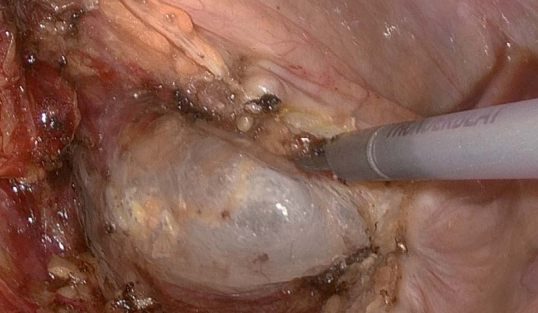
The world of endoscopy is poised to undergo its most profound transformation in decades. No longer a diagnostic specialty, endoscopy is set to evolve into a real-time, AI-augmented therapeutic modality. In 2027, confluence of mature AI, commercialization of robotics platforms, and fundamental shifts in clinical workflow will change what endoscopy can do. This article highlights what endoscopic specialties and engineers should be watching in the coming years.
The AI Inflection Point: From Detection Aid to Clinical Workflow Partner
Artificial intelligence has crossed the threshold from interesting tool to clinically-viable asset. Most mature applications of AI thus far have been for computer-aided detection (CADe) in colonoscopy – with adenoma detection rates improving by 15-20% over standard colonoscopy in randomized controlled trials – and these benefits are consistent across levels of experience [ref]. In upper GI, convolutional neural networks for Barrett’s surveillance have achieved sensitivities and specificities nearing 90% in some cases, rivalling expert endoscopists.
The 2027 endoscopy landscape will begin to see AI-assisted quality control as a major point of departure: a multi-center RCT across over 32,000 patients recently found that using AI-assisted endoscopic quality control significantly improved upper GI neoplasm detection rates. It is likely that AI’s greatest value will be in assisting in the standardization of endoscopic examination.
AI is also beginning to move beyond simple detection to therapeutic endoscopy. Intravenous vessel detection systems have been demonstrated to increase the detection rate of vessels during third-space procedures from 56.4% to 72.4%, while also reducing detection time from 6.7 to 5.2 seconds. This marks a subtle but significant shift in AI’s role in endoscopy – “from finding disease” to “guiding intervention.”
The next frontier for 2027 endoscopy is foundation models, multimodal learning, and large language models entering the endoscopic pipeline – with the promise of creating unified systems for image interpretation, procedure documentation, and clinical decision-making. However, regulatory and validation hurdles have yet to catch up to the technology.
Robotics Breaks Through: From Rigid Tools to Compliant Systems
If AI is the “brain” of next-generation endoscopy, robotics is the “hands.” The most significant shift is the introduction of soft robotics and continuum platforms targeted at endolumenal applications: a fundamentally different approach from rigid laparoscopic robots adapted for endoscopic use.
Soft robotic devices have several advantages over their rigid counterparts in single-port and natural orifice transluminal endoscopic surgery (NOTES): they can conform to complex anatomical pathways, reduce tissue trauma, and access confined spaces that rigid instruments cannot reach. Active research areas include pneumatic and magnetic actuation, variable stiffness, and embedded fiber-based sensing for haptic feedback – all critical for navigating tortuous anatomy safely.
The bronchoscopy robotics space provides an interesting preview of what 2027 endoscopy may look like. The clinical need to access peripheral lung lesions has driven significant investment in this arena, with companies such as Johnson & Johnson (Auris Health’s Monarch platform), Olympus (Veran Medical acquisition), and others investing substantially in the space. IQVIA projects that bronchoscopic and percutaneous lung procedures will nearly reach 10 million cases in China by 2027 – up from roughly 6 million in 2020.
For GI applications, the EndoMaster EASE system – which uses two flexible robotic arms for colonic endoscopic submucosal dissection – has entered clinical evaluation. The transition from prototype to viable commercial product is the central challenge, with sterilization, durability, and force transmission cited as key barriers.
Capsule Endoscopy’s Quiet Revolution: Beyond the Small Bowel
Capsule endoscopy is undergoing a quiet revolution of its own – not only in small-bowel diagnosis but in broader GI indications and AI-powered reading. Companies like CapsoVision are pursuing capsule platforms for colon evaluation, with AI-assisted reading technologies to streamline the diagnostic process and reduce physician reading burden.
The strategic value of capsule endoscopy is clear: it addresses several systemic pressures at once – patient preference for non-invasive procedures, physician workflow efficiency, and an increased demand for screening in aging populations. The integration of cloud-based video delivery and AI triage algorithms could make capsule endoscopy a viable solution for population-level screening, although reimbursement and clinical validation for expanded indications remain key hurdles.
Market and Access Dynamics: The China Factor
Any 2027 outlook on endoscopy would be incomplete without consideration of China’s outsized influence on the global endoscopy market. The country’s digestive endoscopy market has grown at double-digit rates, driven by high GI cancer incidence, government-mandated early screening programs, and expanding healthcare infrastructure.
The supply-side bottleneck is beginning to ease – in 2019, China had roughly 22 endoscopists per million population, compared to around 250 in Japan and 120 in South Korea. While the gap is significant, the workforce is growing (up 51% from 2012 to 2019).
Domestic manufacturing is also beginning to mature – Chinese endoscope manufacturers have achieved dominance in primary and secondary hospitals (domestic share rising from 60% to 95%), but high-end tertiary hospital penetration is limited (projected at 7.5% by 2026). The question for endoscopists in 2027 is whether China’s endoscope manufacturers will be able to leverage their volume leadership position to gain technological leadership in AI integration.
The global endoscopy devices market is projected to reach $43.82 billion by 2027 – a CAGR of approximately 4.1% from 2019 – with growth being relatively steady rather than explosive. However, the composition of the market is changing – with an increasing emphasis on software, AI, and service-based models.
What to Watch in 2027
Three developments will serve as bellwethers for the field’s future trajectory:
Regulatory clearances for AI as a primary diagnostic aid. If AI systems can gain approval for autonomous or semi-autonomous lesion characterization, the economic and workflow implications will be significant.
First-generation soft robotic platforms reaching commercial availability. The transition from clinical trials to market entry will be a litmus test for whether the engineering elegance of continuum robots can translate into practical, maintainable clinical tools.
Reimbursement pathways for AI-assisted and robotic endoscopy. Without viable payment models for these technologies, even the most impressive technical advances may struggle to find a foothold in clinical practice.
The endoscopy of 2027 will not look dramatically different from today’s – but the intelligence infused into the instruments, the precision of the procedures it enables, and the workflows it unlocks will represent a major step forward. The era of precision-guided, AI-augmented, robotically-assisted endoscopy is right around the corner.